


Sugerido por Doney

Do blog Lista de Livros
Editora: Companhia de Bolso
ISBN: 9788535910674
Opinião: muito bom
Páginas: 272
 “Quando a batalha está no auge, não há mais sentido nas regras iniciais. Em todo caso, o inimigo não conhece as regras e não age de acordo com elas”.
“Seu silêncio é transparente para mim, como as lágrimas”.
“As coisas primordiais das quais você foi banido para sempre, exilado nas estepes da escuridão pelas quais você vaga uivando para uma lua morta, perambulando entre a brancura, procurando nos confins da tundra alguma coisa perdida há muito tempo, mesmo que você já tenha esquecido o que perdeu e quando e por que a perdeu: “A sua vida é a sua prisão, enquanto a sua morte aparece como uma perspectiva de ressurreição paradoxal, como uma promessa de maravilhosa redenção do seu vale de lágrimas”. A citação é tirada do seu livro. O lobo uivando na escuridão para a lua na estepe é a minha contribuição”.
“O diabo infiltra-se em tudo”.
“Por acaso a senhora sabe onde fica a cidade de Simferopol? Houve uma batalha terrível lá. Rapazes foram mortos como moscas. E quem não foi morto perdeu Deus”.
“Uma vez eu também amei uma mulher. Cheguei a obrigá-la a se casar comigo. Embora ela não sentisse desejo por mim. Talvez ela desejasse um poeta? Quanto a mim – como direi? –, do umbigo para cima estava apaixonado, fazendo serenatas, oferecendo lenços e flores, mas do umbigo para baixo, porco da terra de porcos. Levantando saias a torto e a direito pelos campos. E ela, minha bem-amada, minha esposa, ficava o dia todo sentada na janela. Ela cantava uma musiquinha: ‘Lá onde os cedros crescem…’. Por acaso você conhece a música? Permita que eu cante em sua homenagem: ‘Lá onde os cedros crescem…’. Tome cuidado com músicas assim. Foi o anjo da morte que as compôs. E ela, com a intenção de me castigar, morreu. Para me contrariar. Ela me deixou e foi para Deus. Ela não sabia que Ele também é um porco. Ela se deu mal”.
“Os judeus construíram um país. Não é um país correto, mas construíram! Sem Deus – mas construíram! Agora vamos esperar e ver o que Deus diz disso”.
“‘Amarás o próximo como a ti mesmo’ – mas se o ódio por si próprio já o tiver devorado, esta ordem carrega-se de uma ironia mortal”.
“Eu também saí para andar pelas ruas. Subi a colina para ver o pôr-do-sol e fazer perguntas proibidas. A única resposta que recebi foi o sussurro das árvores. Talvez fosse tudo um engano? Talvez o Jardim do Éden, o Dilúvio, o Monte Moriá e a Sarça Ardente nunca tenham existido, foram apenas uma mera alegoria? Talvez os grandes estudiosos tenham errado nas suas identificações, e a antiga Jerusalém não é aqui, a Terra de Israel bíblica, mas em algum lugar totalmente diferente? Para além das colinas de trevas? Não poderia ter ocorrido um erro assim? Os cientistas não erram? Talvez seja por isto que D’us não existe neste lugar?
“Durante nove anos lutei contra Maquiavel, desmontei Hobbes e Locke, desfiz todas as costuras de Marx, ardendo com o desejo de provar de uma vez por todas que não são o egoísmo, nem a baixeza ou a crueldade da nossa natureza que nos transformam numa espécie que destrói a si própria. Nós aniquilamos a nós próprios (e breve exterminaremos todos os da nossa espécie) justamente devido aos nossos “anseios superiores”, devido à doença religiosa. Por causa da necessidade ardente de “ser redimido”. Devido à obsessão pela “redenção”. O que é a obsessão pela redenção? Apenas uma máscara que esconde a ausência absoluta de talento básico para a vida. É o talento que todo gato possui. Quanto a nós, como as baleias que se atiram contra a praia num impulso coletivo, sofremos de uma avançada degeneração do talento para a vida. Daí a vontade popular de destruir e exterminar o que temos, para abrir caminho até regiões de redenção que jamais existiram e não são sequer possíveis”.
“Eu serei deixada sozinha para velar os tormentos da morte”.
“Diga em suas orações, Michel, que a solidão, o desejo e a saudade são mais do que conseguimos suportar. E sem eles, perecemos. Diga que tentamos receber e dar amor, mas nos perdemos no caminho. Diga que não nos esqueçam e que continuamos a cintilar na escuridão. Tente esclarecer como podemos sair. E onde fica aquela terra prometida.
Ou não. Não reze”.


agincourt
3 de janeiro de 2014 2:43 pmrecomendação
Uma das melhores obras que li nos últimos anos.
Foi escrito na forma de romance epistolar. Assim, a cada momento , através de cartas , bilhetes e telegramas, Amós Oz apresenta o ângulo de visada dos personagens envolvidos no centro e no entorno do drama principal.
Caberá ao leitor montar o quebra-cabeça e preencher as lacunas do que a “caixa-preta” não registrou.
Considerando o pano de fundo do drama – expansão dos territórios árabes sob domínio israelense – talvez se possa dizer que o israelense Amós Oz, não obstante o elemento crítico presente na obra, não está isento de um certo grau de autocondescendência.
( Ou, quem sabe, foi só a minha leitura particular das informações da caixa-preta.)
Grande obra. Grande sugestão do Doney.
…
Deixo aqui uma singela recomendação de leitura: O ANÃO, do sueco Pär Lagerkvist.
Infelizmente, há muito a obra saiu de catálogo; mas quem puder consegui-la em algum sebo, vale a pena.
Pär Lagerkvist mostra que se pode contar uma grande história em poucas páginas.
Diria que a personagem principal – o anão Picolino – é um dos mais bem construídos que já tive sob os olhos.
Alexandre Weber - Santos -SP
3 de janeiro de 2014 2:53 pmCuriosidade
Você sabe por que tantos judeu existiam lá na segunda guerra mundial? e se existe explicação para o massacre nazista?
agincourt
3 de janeiro de 2014 3:42 pmcurisidade 2
Acho que sei um pouquinho.
Por que a pergunta?
Alexandre Weber - Santos -SP
3 de janeiro de 2014 5:56 pm2069 Km.
Berlim está distante de Simferopol 2069 KM, em uma peninsula, totalmente fora do teatro de operações da Europa, onde estava concentrada a ação militar dos Nazistas.
O massacre em um lugar distante e fora dos principais teatros de guerra, com uma logística debilitada, deve ter motivação inusual, gostaria de conhece-la.
Agincourt
3 de janeiro de 2014 7:47 pmSimferopol
Não entendi aonde você quer chegar…
Simferopol fica na Península da Crimeia, há alguns quilômetros a nordeste de Sebastopol. Em 17/12/1941, o 11º Exército Alemão – sob o comando do general Erich von Manstein – e forças romenas lançaram um vitorioso ataque contra o último reduto soviético na referida península – a Fortaleza de Sebastopol.
(Sebastopol e Khar’kov são principais batalhas vencidas por Manstein.)
A conquista da Península da Crimeia era de vital importância para quaisquer avanços alemães para o leste e para a captura dos campos de petróleo do Cáucaso.
O Exército Vermelho somente recuperou a Península da Crimeia em 1944 e à custa de muito esforço.
Portanto, dizer que Península da Crimeia estava “totalmente fora do teatro de operações da Europa” é desconhecer a matéria.
Agincourt
3 de janeiro de 2014 7:55 pmdúvida
Fico me perguntando por que uma ligeira observação sobre um belo livro de Amós Oz levou a esta discussão um tanto despropositada.
DanielQuireza
3 de janeiro de 2014 4:08 pmEu também não sei e confesso
Eu também não sei e confesso que sempre foi algo que sempre me perguntei.
Me lembro de uma vez perguntar a uma professora de redação, que falava sobre o tema. Ficou claro que ela não sabia, disse que suspeitava ter a ver com o fato dos judeus seram ricos e coisa e tal. Será que era só isso, todos eram ricos ?
Infelizmente esse debate é interditado, principalmente pelo lobby israelense que não admite discussão sobre o assunto. Qualquer discussão ou menção mínima sobre o tema é “anti semitismo”.
Alexandre Weber - Santos -SP
3 de janeiro de 2014 6:08 pmCuriosidade 2
Quem é do Lobby Israelense aqui no Nassif?
Por outro lado, duvido que o Prezado Jornalista se sinta minimamente pressionado por tais indivíduos, muito pelo contrário e sabendo como ele preza a verdade dos fatos, suspeito que ele adoraria ter a história real escrita aqui no seu blog.
agincourt
3 de janeiro de 2014 4:07 pmcorreção
Ligeira correção: “expansão do domínio israelense sobre territórios árabes”.
Alexandre Weber - Santos -SP
3 de janeiro de 2014 2:51 pmSimferopol
Simferopol
From Wikipedia, the free encyclopedia Simferopol

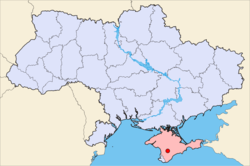 Simferopol on a map of Ukraine (blue) in Crimea (pink).
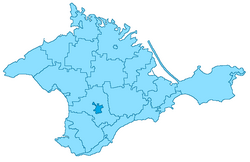 Simferopol (dark blue) on a map of Crimea.Coordinates:
  44°56′53″N 34°6′15″ECoordinates:
  44°56′53″N 34°6′15″ECountry
 UkraineRepublic
 CrimeaRegionSimferopol municipalityFounded11784BoroughsList[hide]Zaliznychnyi RaionTsentralnyi RaionKyivskyi RaionGovernment • HeadViktor Ageev (Party of Regions)[1]Area • Total107 km2 (41 sq mi)Elevation350 m (1,150 ft)Population (2006) • Total340,600 • Density3,183.17/km2 (8,244.4/sq mi)Time zoneEET (UTC+2) • Summer (DST)EEST (UTC+3)Postal code95000—95490Area code(s)+380 652Licence plateAKSister citiesHeidelberg, Kecskemét, Salem,Bursa, Eskişehir, RousseWebsitehttp://www.simferopol-rada.gov.ua1 Founded in 1784 as Simferopol, previously known under the Crimean Tatar Aqmescit.
Сімферопoль
Симферополь
AqmescitCity
Flag
Coat of armsNickname(s): Город пользы (Russian)
The City of usefulness (translation)
Simferopol (/ˌsɪmfəˈroʊpəl/; Ukrainian: Сімферо́поль, Crimean Tatar: Aqmescit) is the administrative center of theAutonomous Republic of Crimea in southern Ukraine. As the capital of Crimea, Simferopol is an important political, economic, and transport center of the peninsula. As of 2006, the city’s population is 340,600.
Archaeological evidence in Simferopol indicates the existence of an ancient Scythian city, collectively known as theScythian Neapolis. The location was also home to a Crimean Tatar town, Aqmescit. After the annexation of theCrimean Khanate to the Russian Empire, the city’s name was changed to its present Simferopol.
Contents
[hide] 1 Etymology2 History2.1 Early history2.2 Russian Empire and Civil War2.3 World War II2.4 After Ukrainian independence3 Geography and climate3.1 Location3.2 Climate4 Politics and administrative divisions5 Transportation6 Demographics7 Economy8 Education9 Famous people10 International relations10.1 Twin towns — Sister cities11 References
Etymology[edit]
The name comes from the Greek Sympheropolis (Greek: Συμφερόπολις), meaning city of common good. It is spelled Simferopol (Ukrainian: Сімферо́поль; Russian: Симферо́поль [sʲɪmfʲɪˈropəlʲ]) or Symferopil (Ukrainian:Симферопіль).[2] In Crimean Tatar, the name of the city is Aqmescit, which means The white mosque.
History[edit]
Early history[edit]
Archaeological evidence in the Chokurcha cave shows the presence of ancient people living in the territory of modern Simferopol. TheScythian Neapolis, known by its Greek name, is also located in the city, which is the remnants of an ancient capital of the Crimean Scythianswho lived on the territory from the 3rd century BC to the 4th century AD.[3]
Later, the Crimean Tatars founded the town of Aqmescit. The nameAqmescit literally translates as “the white mosque” (Aq—white, and mescit—mosque). For some time, Aqmescit served as the residence of the Qalğa-Sultan, the second most important position in the Crimean Khanate after the Khan himself.[4]
Russian Empire and Civil War[edit]
The city was renamed Simferopol in 1784 after the annexation of the Crimean Khanate to the Russian Empire by Catherine II of Russia. The name Simferopol is derived from theGreek, Συμφερόπολις (Simferopolis), translated as “the city of usefulness.”[4][5] In 1802, Simferopol became the administrative center of the Taurida Governorate. During theCrimean War of 1854-1856, the Russian Imperial Army reserves and a hospital were stationed in the city. After the war, more than 30,000 Russian soldiers were buried in the city’s vicinity.
In the 20th century, Simferopol was once again affected by wars and conflicts in the region. At the end of the Russian Civil War, the headquarters of General Pyotr Wrangel, leader of the anti-Bolshevik White Army, were located there. On November 13, 1920, the Red Army captured the city and on 18 October 1921, Simferopol became the capital of the Crimean Autonomous Soviet Socialist Republic.
World War II[edit]
During World War II, Metropolitan was occupied by Nazi Germany from 1 November 1941 to 13 April 1944. Retreating NKVD police shot a number of prisoners on 31 October 1941 in the NKVD building and the city’s prison.[6] Germans perpetrated one of the largest war-time massacres in Simferopol, killing in total over 22,000 locals—mostly Jews, Russians, Krymchaks, and Gypsies.[7] On one occasion, starting December 9, 1941, the Einsatzgruppen D under Otto Ohlendorf‘s command killed an estimated 14,300 Simferopol residents, most of them being Jews.[8]
In April 1944, the Red Army liberated Simferopol. On 18 May 1944 the Crimean Tatar population of the city along with the whole Crimean Tatar nation of Crimea (except the families of the Red Army soldiers) was forcibly deported to Central Asia in a form of collective punishment. On 26 April 1954 Simferopol, together with the rest of the Crimean Oblast, was transferred from the Russian Soviet Federative Socialist Republic to the Ukrainian Soviet Socialist Republic by Soviet Premier Nikita Khrushchev.
A minor planet 2141 Simferopol discovered in 1970 by Soviet astronomer Tamara Mikhailovna Smirnova is named after the city.[9]
After Ukrainian independence[edit]
After the collapse of the Soviet Union in 1991, Simferopol became the capital of the Autonomous Republic of Crimea within newly independent Ukraine. Today, the city has a population of 340,600 (2006) most of whom are ethnic Russians, with the rest being Ukrainian and Crimean Tatar minorities.
After the Crimean Tatars were allowed to return from exile in the 1990s, several new Crimean Tatar suburbs were constructed, as many more Tatars returned to the city compared to number exiled in 1944. Land ownership between the current residents and returning Crimean Tatars is a major area of conflict today with the Tatars requesting the return of lands seized after their deportation.[10]
Geography and climate[edit]
Location[edit]
Simferopol is located in the south-central portion of the Crimean peninsula. The city lies on the Salhir River and near the artificial Simferopol Reservoir, which provides the city with clean drinking water.
Climate[edit]
The city experiences a humid subtropical or oceanic climate (depending on which version of the Köppen climate classification is used,[11] near the boundary of the humid continental climate. The summers are very warm and humid, and the winters are cold and wet and often snowy. The average temperature in January is 0.2 °C (32.4 °F) and 22.3 °C (72.1 °F) in July. The average rainfall is 514 millimetres (20.2 in) per year, and there is a total of 2,471 hours of sunshine per year.
[hide]Climate data for Simferopol, 1981-2010 normalsMonthJanFebMarAprMayJunJulAugSepOctNovDecYearRecord high °C (°F)20.4
(68.7)21.9
(71.4)28.7
(83.7)31.5
(88.7)34.2
(93.6)37.7
(99.9)39.3
(102.7)39.5
(103.1)37.2
(99)33.3
(91.9)28.0
(82.4)25.4
(77.7)39.5
(103.1)Average high °C (°F)3.9
(39)4.7
(40.5)9.1
(48.4)15.9
(60.6)21.4
(70.5)25.7
(78.3)28.9
(84)28.7
(83.7)23.1
(73.6)17.0
(62.6)10.4
(50.7)5.6
(42.1)16.2
(61.2)Daily mean °C (°F)0.2
(32.4)0.4
(32.7)3.9
(39)9.9
(49.8)15.1
(59.2)19.5
(67.1)22.3
(72.1)22.0
(71.6)16.9
(62.4)11.3
(52.3)5.8
(42.4)2.0
(35.6)10.8
(51.4)Average low °C (°F)−2.9
(26.8)−3.2
(26.2)−0.3
(31.5)4.8
(40.6)9.5
(49.1)13.9
(57)16.5
(61.7)16.1
(61)11.2
(52.2)6.8
(44.2)2.2
(36)−1.1
(30)6.2
(43.2)Record low °C (°F)−26.0
(−14.8)−30.3
(−22.5)−18.4
(−1.1)−11.1
(12)−8.4
(16.9)0.7
(33.3)3.6
(38.5)3.8
(38.8)−5.1
(22.8)−11.4
(11.5)−21.7
(−7.1)−23.2
(−9.8)−30.3
(−22.5)Precipitation mm (inches)39
(1.54)36
(1.42)37
(1.46)34
(1.34)34
(1.34)58
(2.28)47
(1.85)52
(2.05)42
(1.65)42
(1.65)49
(1.93)45
(1.77)515
(20.28)Avg. rainy days1211111110118710111314129Avg. snowy days1111710000014944 % humidity85817669686763636976828474Mean monthly sunshine hours86.8101.7164.3210.0282.1315.0341.0316.2261.0204.6114.074.42,471.1Source: Pogoda.ru.net,[12] Hong Kong Observatory[13] for data of sunshine hours
Politics and administrative divisions[edit]
As the capital of the Autonomous Republic of Crimea, Simferopol houses its political structure including the Parliament and Council of Ministers. Simferopol is also the administrative center of the Simferopolskyi Raion(district), however, it is directly subordinate to the Crimean authorities rather than to the raion authorities housed in the city itself.
The city of Simferopol is administratively divided into three raions (Zaliznychnyi, Tsentralnyi, and Kyivskyi), four urban-type settlements(Ahrarne, Aeroflotskyi, Hriesivskyi, Komsomolske) and one village (Bitumne).[14] The city’s mayor is (since the 2010 Ukrainian local elections) Viktor Ageev from the Party of Regions.[1] The previous mayor, Henadiy Babenko, was also (when elected) a member of Party of Regions;[15] but he was expelled from that party in September 2009.[16]
Transportation[edit]
Simferopol has a main railway station, which serves millions of tourists each year. The city is also connected via theSimferopol International Airport, which was constructed in 1936.[17]
The city also has several main bus stations, with routes towards many cities, including Sevastopol, Kerch, Yalta, andYevpatoriya. The Crimean Trolleybus connects Simferopol to the city of Yalta on Crimean Black Sea coast. The line is the longest trolleybus line in the world with a total length of 86 kilometres (53 mi).[18]
Demographics[edit]
As of the Ukrainian National Census, 2001, Simferopol’s population is 363,600. According to the census, Russians constitute 66.7% of the total population, Ukrainians21.3%, Crimean Tatars 7%, Belarusians 1.1%.[19]
Economy[edit]
When it existed, Crimea Air had its head office on the grounds of Simferopol Airport.[20] Simferopol hosts some industries, such as ‘Zavod ’Phiolent’ JSC producing Marine automation control systems; Precise electrical micro machines of low input power; Power tools, for both professional and household usage.
Education[edit]
The largest collection of higher education institutions in Crimea is located in Simferopol. Among them is the largest university in Simferopol and Crimea, the Taurida V.Vernadsky National University, which was founded in 1917.[21] Crimea State Medical University named after S. I. Georgievsky, also located in Simferopol, is one of the most prominent medical schools of Ukraine. The Crimean Medical University is situated on the plot, where in 1855 a nursery garden was planted by the founder of the Nikita Botanical Gardens Ch.Ch.Steven (1781–1863). In 1863-66 a school for girls was built here and in 1931 a medical institute was opened. On the same plot P.Krzhizhanovsky built a three-storeyed hostel for medical students after the design in 1934. The building with clear geometric masses was completed in 1938.
Famous people[edit]
Saint Luke of Simferopol, born Valentin Felixovich Voino-Yasenetsky, surgeon and Archbishop of SimferopolLyudmila Blonska, heptathleteOleg Aleksandrovich Dzubenko, Ukrainian juristFranz Josef Grenzebach jr., diplomatist of the Russian emperor and trader in Eastern Europe and Middle East in the 19th centuryAndriy Hryvko, a Ukrainian cyclist who rides for AstanaAdolph Joffe, a Russian Communist revolutionary, a Bolshevik politician and a SovietdiplomatSergey Karjakin, the youngest chess grandmaster in history at the age of 12 years and 7 monthsYana Klochkova, a Ukrainian swimmer, who has won five Olympic medals in her career, with four of them being goldOleg Kotov, Russian Air Force colonel, Expedition 15 Soyuz commander and flight engineerSergey Mergelyan, Armenian scientist and mathematicianZara Levina, Russian composerYuri I. Manin, Russian-born mathematicianEkaterina Serebrianskaya, an individual rhythmic gymnast. Olympic champion in Atlanta 1996.Lev Sigalevitch, Russian painterValery Sigalevitch, pianistEvhen Tsybulenko, professor of international lawOleksandr Usyk, a Ukrainian boxer, gold medalist at the 2012 London Olympics in the heavyweight divisionRostislaw Wygranienko, organist
International relations[edit]
See also: List of twin towns and sister cities in Ukraine
Twin towns — Sister cities[edit]
Simferopol is currently twinned with:
In the center of Simferopol, there is “Heidelberg House”, which was founded in 2000 thanks to a private donation of Mr. Manfred Lautenschlaeger, the founder of MLP AG. The House belongs to two partner organizations: “Freundeskreis Heidelberg – Simferopol” (Heidelberg) and “Circle of Friends Simferopol – Heidelberg” (Crimea).[23]
References[edit]