


12 Facts About Thomas A. Dorsey


1. Thomas Dorsey was born in Villa Rica, Georgia on July 1, 1899 and died at the age of 93 in Chicago, Illinois on January 23, 1993 and is interred in the Oak Woods Cemetery in the Southside of Chicago, IL.
2. Thomas Dorsey originally performed under the name of Georgia Tom and was a leading Blues pianist.
3. Thomas A. Dorsey currently is credited with publishing over 400 songs and composed hundereds more.
4. Mr. Dorsey’s most famous composition, “Precious Lord, Take My Hand” was composed during the grief he suffered after his first wife, Nettie, and his first son, Thomas Andrew Jr., died in childbirth in 1932. After this even, Dorsey no longer performed the blues and committed himself entirely to gospel music.
5. Thomas Dorsey established the first black gospel publishing company entitled Dorsey’s House of Music, founded his own gospel choir and was the founder and served as the first president of the National convention of Gospel Choir and Choruses.
6. Dorsey is considered the Father of Black Gospel Music primarily due to the way he combined christian praise with rhythms of jazz and blues. He is even credited with devising the term “Gospel Music”
7. Thomas A. Dorsey was the first African Ameriacn elected to the Nashville Songwriters Hall of Fame and the Gospel Music Association’s Living Hall of Fame.
8. Thomas A. Dorsey is a member of Omega Psi Phi Fraternity.
9. His song, “Precious Lord, Take My Hand” was sung at a rally the night before Martin Luther King, Jr. was assasinated and at the funeral of Martin Luther King, Jr. and President Lyndon B. Johnson per their request.
10. Thomas A. Dorsey taught himself how to play the piano primarily by listening to the talented musicians that performed while he worked concessions at the age of 11 at the 81 Theater, a prestigious venue in Atlanta’s Black Entertainment District, after dropping out of school to work and help support his family.
11. Dorsey is also responsible for discovering and nurturing the career of the world’s first gospel superstar, Mahalia Jackson.
12. Thomas Dorsey served as Music Director of Pilgrim Baptist Church from 1932 to the late 1970′s.
http://blackartblog.blackartdepot.com/african-american-leaders/12-facts-about-thomas-dorsey.html
Humanities Themes:
· The development of Gospel music in its historical/cultural context.
· The role of composer Thomas A. Dorsey in the development of Gospel music.
· How did black and white populations react to Gospel music in its early development? Did class and economic status, as well as race, influence acceptance or rejection of the new Gospel sound?
· Themes in early Gospel hymns as they reflect what was happening in society in the 1930s — upheaval, dislocation, nation-wide poverty in the Great Depression.
· Gospel music developed the talents of Aretha Franklin, Al Green and other pop singers who would emerge in the mid 20th century, how does it continue to influence American popular music.
· The phenomenon of the Gospel hymn “Precious Lord” illustrates the importance of radio in disseminating new styles of music.
· The introduction of amplified instruments and drums in churches. How jazz rhythms were transformed from being perceived as “the Devil’s music” in the 1920s to legitimate sacred music with the new Gospel sound.
http://www.youtube.com/watch?v=nEosw5GUCzQ]
http://www.youtube.com/watch?v=9l4TgVO9uwA]
http://www.youtube.com/watch?v=XGFhbtY-XzE]
http://www.youtube.com/watch?v=O-JmSNNUGgw]
http://www.youtube.com/watch?v=b98YFK5Oubo]
https://www.youtube.com/watch?v=as1rsZenwNc]
https://www.youtube.com/watch?v=HVMeRULuUB4]
https://www.youtube.com/watch?v=0hvCiJ6b8-o]
https://www.youtube.com/watch?v=5KFtEnMtMTU]
https://www.youtube.com/watch?v=sJsV495hYhE]
https://www.youtube.com/watch?v=PLNO2EGIgB0]
https://www.youtube.com/watch?v=qYRoU35_bpQ]
Ma Rainey – Hustlin’ Blues
From The Album: Street Walker Blues: Vintage Songs About Prostitution Volume 2
Vocals – Ma Rainey, Piano – Georgia Tom Dorsey, Banjo – Martell Pettiford, Kazoo – Herman Brown, Jazzhorn/Jug – Carl Reid. Recorded In Chicago June 12th 1928.
https://www.youtube.com/watch?v=gcPTrcbVatM]
outra interessante!
No Matter How She Done It”…I can guess. A great song by this duo from the 30’s. Enjoy!
Tampa Red, vocal and guitar.
Thomas A. Dorsey (Georgia Tom), piano and vocals.
Lyrics by Tampa Red:
I know a gal by the name of Mae Lou
She shook it so much she had the German flu
(chorus:)
No matter how she done it,
No matter how she done it,
No matter how she done it,
She done it just the same
The women don’t like her, they call her Ida Mae
But the way the men love her is a cryin’ shame
(chorus)
I tell you people what she done
She made a hit with Jack the Ripper, and the only one
https://www.youtube.com/watch?v=cydR8yauc3c
(chorus)
You women don’t have to worry ‘bout your life
She made Jack the Ripper throw away his knife
(chorus)
She shakes all over when she walks
She made a blind man see, and a dumb man talk
(chorus)
The copper brought her in, she didn’t need no bail
She shook it for the judge, and put the cop in jail
[video:https://www.youtube.com/watch?v=6kdkBNqoWuo
outra!
[video:https://www.youtube.com/watch?v=QXLfzLzIwdI
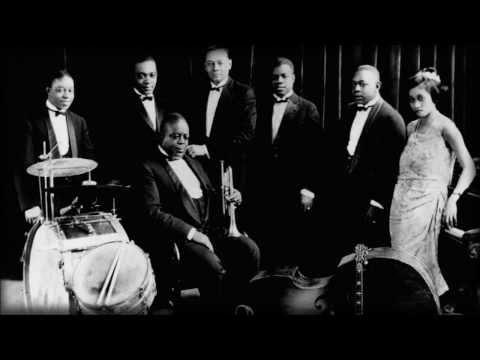
Soh para finalizar nestes 02:51 iniciais abaixo a presenca de Thomas em Chicago e onde ele andava e com quem, aqui esta a Band de SIR. King Oliver
King Oliver’s Jazz Band – The Paramount Sessions
Early September, 1923
Paramount Recording Studio, Chicago, IL
* Hans Westerberg gives December 24, 1923 for this session. Irakli de Davrichewy, discographer for the Media 7 CD series, defends his dating of this session as Early September. He makes a convincing case that the earlier attributed date of December 24 is an arbitrary and unlikely choice. Jos Willems concurs with the Early September date.
* The songs were mixed following their catalog numbers’ order.
TRACK LISTING
00:00 Riverside Blues [Master 1624-2 [Richard M. Jones / Thomas A. Dorsey [Paramount 20292-A
02:51 Mabel’s Dream [Master 1622-1 [Ike Smith [Paramount 20292-B
05:36 The Southern Stomps [Master 1623-2 [Dave Peyton / Richard M. Jones [Paramount 12088-A
* Riverside Blues is not credited to anybody, but is was actually composed by Richard M. Jones and Thomas A. Dorsey.
* The Southern Stomps is credited to “J. M. Jones”, but it was actually composed by Dave Peyton and Richard M. Jones, which also suggests a misspelling on Jones’ names.
* The Southern Stomps was released b/w Dearborn Street Blues [Bernie Young, by Young’s Creole Jazz Band.
[video:https://www.youtube.com/watch?v=GAZBgZkS–w


Deixe um comentário